Tyvenza (Semaglutide) injection 0.25mg, 0.5 mg, 1 mg, or 2 mg is an injectable prescription medicine used:
- Along with diet and exercise to improve blood sugar (glucose) in adults with type 2 diabetes.
- To reduce the risk of major cardiovascular events such as heart attack, stroke, or death in adults with type 2 diabetes with known heart disease.
- To reduce the risk of kidney disease worsening, kidney failure (end-stage kidney disease), and death due to cardiovascular disease in adults with type 2 diabetes and chronic kidney disease.
It is not known if Tyvenza (Semaglutide) is safe and effective for use in children.


There are several reasons that Tyvenza (Semaglutide) could be right for you if you are an adult who has type 2 diabetes.
- Tyvenza (Semaglutide) is proven to lower blood sugar and A1C along with diet and exercise
- Tyvenza (Semaglutide) lowers the risk of major cardiovascular events such as stroke, heart attack, or death in adults who also have heart disease
- Tyvenza (Semaglutide) lowers the risk of worsening kidney disease, kidney failure (end-stage kidney disease), and death due to cardiovascular disease in adults who also have chronic kidney disease
- Tyvenza (Semaglutide) may also help you lose weight. Tyvenza is not a weight-loss drug.
Powerful A1C reduction
The American Diabetes Association recommends that a reasonable goal for most adults with type 2 diabetes is an A1C less than 7%. Your health care professional will tell you what goal is right for you.
A majority of adults taking Semaglutide reached an A1C under 7% and maintained it. In 2 different studies, adults with type 2 diabetes lowered A1C, on average, by:
- Semaglutide:1.4% (0.5 mg) and 1.6% (1 mg) vs placebo: 0.1%
- Semaglutide:1.9% (1 mg) and 2.1% (2 mg), taking 1 or 2 diabetes pills
from a starting average A1C of 8.0% and 8.9%, respectively.
In the same 2 studies, the majority of people reached an A1C under 7%:
- Semaglutide:73% (0.5 mg) and 70% (1 mg) vs placebo: 28%
- Semaglutide:56% (1 mg) and 64% (2 mg)
Lower your risk of major cardiovascular events
People with type 2 diabetes and known heart disease are at a greater risk of major cardiovascular events such as stroke, heart attack, or death. Semaglutide is proven to lower those risks.
Semaglutide lowers the risk of major cardiovascular events such as stroke, heart attack, or death in adults who also have heart disease.
Lower the risk of kidney disease getting worse
In adults with type 2 diabetes and chronic kidney disease, there is an increased risk of the disease worsening or of experiencing cardiovascular death. Semaglutide is proven to significantly lower those risks, including the risk for kidney failure and death due to cardiovascular disease.
Semaglutide is the first and only medicine in its class (GLP-1) proven to help lower the risk of worsening kidney disease, kidney failure (end-stage kidney disease), and death due to cardiovascular disease in adults who also have chronic kidney disease.
Semaglutide may also help you lose weight
Across studies looking at A1C, adults lost on average from 3.2 kg to 6.39 kg with Semaglutide.
You take Tyvenza (Semaglutide) once weekly with a Tyvenza (Semaglutide) pen, as prescribed and instructed by your health care professional. Read the Medication Guide and Instructions for Use that come with Tyvenza for additional information. For questions, you should speak with your health care professional.
Your health care professional should show you how to use Tyvenza (Semaglutide) before you use it for the first time. Tyvenza (Semaglutide) is injected under the skin (subcutaneously) of your stomach (abdomen), thigh, or upper arm. Do not inject Tyvenza (Semaglutide) into a muscle (intramuscularly) or vein (intravenously).
The most common side effects of Tyvenza (Semaglutide) may include: nausea, vomiting, diarrhoea, stomach (abdominal) pain, and constipation.
The most commonly reported side effects are related to the stomach and digestion. Follow the dose escalation schedule provided by your health care professional to help reduce the risk of these common side effects. Talk to your health care professional about any side effect that continues to bother you or don't go away.
Tyvenza (Semaglutide) is meant for long-term use in Type 2 Diabetes, as diabetes is a progressive condition and ongoing treatment helps maintain blood sugar control. In clinical studies, Semaglutide has been used for up to 104 weeks, showing sustained benefits.
The duration of treatment may vary depending on your HbA1c levels and overall response. Always talk to your healthcare professional before stopping or changing your treatment.
You may notice better blood sugar control over time, along with reduced appetite and gradual weight loss. Some people feel full sooner while eating, which helps them eat less. Mild side effects like nausea, stomach discomfort, or constipation can occur in the beginning and usually improve as the body adjusts. Regular follow-ups and HbA1c checks will help your doctor track how well the treatment is working for you.
Tyvenza (Semaglutide) is generally well-tolerated for long-term use when taken under medical supervision. Some people may experience ongoing stomach-related symptoms like nausea, vomiting, constipation, or acidity. In rare cases, gallbladder problems or inflammation of the pancreas can occur.
Regular check-ups and blood tests help monitor safety during treatment. Always inform your doctor if you notice severe abdominal pain, persistent vomiting, or any unusual symptoms while taking this medicine.
- Store your new, unused Tyvenza (Semaglutide) injection pens in the refrigerator between 36°F - 46°F (2°C to 8°C).
- Store your pen in use for 56 days at room temperature between 59oF to 86oF (15oC to 30oC) or in a refrigerator between 36°F and 46°F (2°C and 8°C).
- The Tyvenza (Semaglutide) injection pen you are using should be disposed of (thrown away) after 56 days, even if it still has Tyvenza (Semaglutide) injection left in it. Write the disposal date on your calendar.
- Do not freeze Tyvenza (Semaglutide) injection. Do not use Tyvenza (Semaglutide) injection if it has been frozen.
- Unused Tyvenza (Semaglutide) injection pens may be used until the expiration date (“EXP”) printed on the label, if kept in the refrigerator.
- When stored in the refrigerator, do not store Tyvenza (Semaglutide) injection pens directly next to the cooling element.
- Keep Tyvenza (Semaglutide) injection away from heat and out of the light.
- Keep the pen cap on when not in use.
- Keep Tyvenza (Semaglutide) injection and all medicines out of the reach of children.
No. You should never share your Tyvenza (Semaglutide) pen with anyone, even if the needle is changed. Sharing can spread infections and may lead to incorrect dosing. Each pen is meant for use by one person only.
If Tyvenza (Semaglutide) has been stopped for several weeks or months, it is usually recommended to restart at the initial low dose (0.25 mg once weekly) and then gradually increase the dose again. This helps reduce stomach-related side effects such as nausea, vomiting, or abdominal discomfort.
Always speak with your healthcare professional before restarting. Do not resume the previous higher dose without medical advice.
No. Tyvenza (Semaglutide) should not be started at higher doses. Treatment is usually started at a low dose and increased gradually to allow your body to adjust. Starting at 1 mg or 2 mg directly can increase the risk of side effects such as nausea, vomiting, stomach pain, and discomfort.
Rapid dose escalation or starting at higher doses may also increase the risk of gallbladder-related issues. Weight loss and changes in bile flow associated with GLP-1 receptor agonists have been linked with conditions such as gallstones (cholelithiasis) and gallbladder inflammation (cholecystitis) in some patients. Clinical trials and safety analyses have shown a small but increased occurrence of gallbladder events in people using Semaglutide, particularly in those who experience rapid weight loss.
For safety and better tolerability, Tyvenza (Semaglutide) is designed to be started at a low dose and increased slowly over time. Always follow your doctor’s advice on dose escalation.
Your doctor will guide you on slowly increasing the dose based on your blood sugar levels and how well you tolerate the medicine.
Tyvenza (Semaglutide) is given as an injection because medicines taken by mouth can be affected by stomach acids and may not be absorbed properly. Injecting it under the skin helps the medicine enter the bloodstream steadily and reliably, allowing it to work effectively for a full week.
Oral forms of Semaglutide are available, but they need to be taken very carefully on an empty stomach and may cause more stomach-related side effects, such as nausea, acidity, and discomfort in some people. Injectable Semaglutide is often better tolerated and provides more consistent absorption and effect.
In many cases, Tyvenza (Semaglutide) is used along with other oral diabetes medicines to help achieve better blood sugar control. Your doctor may continue, adjust, or sometimes reduce certain tablets depending on your HbA1c levels, blood sugar readings, and how well you respond to treatment.
Do not stop or change any of your diabetes medicines on your own. Always follow your healthcare professional’s advice, as treatment plans are personalised for each patient.
Tyvenza (Semaglutide) is taken once weekly, on the same day each week. It can be taken at any time of the day, with or without food.
Choose a day that is easy to remember (for example, every Sunday morning) and try to stick to that schedule. If needed, the day can be changed, as long as there are at least 3 days (72 hours) between doses. Always follow your doctor’s instructions.
The number of needles provided may vary depending on the pack. Usually, multiple disposable needles are supplied separately with the pen.
Tyvenza (Semaglutide) will be available in 2 mg/3 mL (6 needles), 4 mg/3 mL (4 needles), and 8 mg/3 mL (4 needles) strengths.
Yes, you must use a new needle for every injection. Do not reuse needles. Changing the needle each time helps prevent infection, blockage, leakage of medicine, and ensures you receive the correct dose.
The Tyvenza (Semaglutide) pen is disposable. Each pen is pre-filled and meant to be used until the medicine inside is finished. Once empty, the pen should be safely discarded as mentioned in How to dispose of the Tyvenza (Semaglutide) injection pen? And instructions to use.
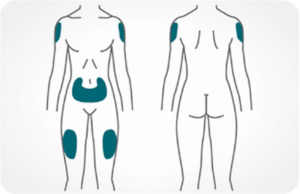
Using the pen, Tyvenza (Semaglutide) is injected under the skin of your abdomen, thigh, or upper arm. Do not inject into a muscle or vein.
Change (rotate) your injection site with each injection. Do not use the same site for each injection. If you choose to inject in the same area, always use a different spot in that area.